Diary of a Wannabe Data Scientist
Learning Data Science One Error Message at a Time
Prologue
I’ve been meaning to write a blog for a long time. You know that “I’ll start next week” lie we all tell ourselves? I’ve said that so many times that it became a mantra. I kept overthinking what my first article should be. Something deep? Technical? Maybe a hot take on AI taking over the world?
Then it hit me. Why not start with the story that got me here in the first place? Because if I’m being honest, the journey from analyst to wannabe data scientist has been… messy. Not the cinematic kind of messy, more like "spent three hours debugging a missing parenthesis" messy. With equal parts comedy, caffeine, and chaos.
So consider this my first entry: The Diary of a Wannabe Data Scientist.
This isn’t a tutorial or a guide, just an honest snapshot of what happens when curiosity collides with code, when Excel isn’t enough anymore, and when a pigeon (yes, an actual pigeon) becomes your career motivator.
Chapter 1: The Analyst Era 🕵🏻♂️
Where Excel was my battlefield, Power BI my sword, and “quick updates” my final boss.
Fresh out of uni, I landed a job as an Automated Systems Analyst. Not the flashiest title, but it packed a punch. In reality, I was the first data analyst on the team, responsible for everything remotely related to data. From day one, I was leading our report migration and SQL/Power BI projects. My manager called me the "data wizard" because every time I wrote a query or built a dashboard, people looked at me like I had just invented electricity. Truthfully, it wasn’t magic. I was just obsessed!
Some days, I felt like a detective uncovering hidden insights. Other days, I was a glorified Ctrl+C, Ctrl+V expert trying to survive yet another meeting. It was good work, stable, and comfortable. I learned a ton, collaborated with smart people, and became dangerously good at Power BI and SQL.
But comfort is sneaky.
After a while, every week started to feel like déjà vu wrapped in a pivot table. The reports blended. The dashboards blurred. But I wanted more. Something that pushed me technically, challenged me creatively, and maybe even scared me a little. I didn’t want to just explain the past; I wanted to predict the future.
I didn’t know exactly what I was looking for yet, but I had a hunch it involved code.

Chapter 2: The Prophetic Pigeon 🕊️
How a spreadsheet burnout, a prophetic pigeon, and too much coffee pushed me toward data science.
It was one of those late afternoons that felt heavier than they should.
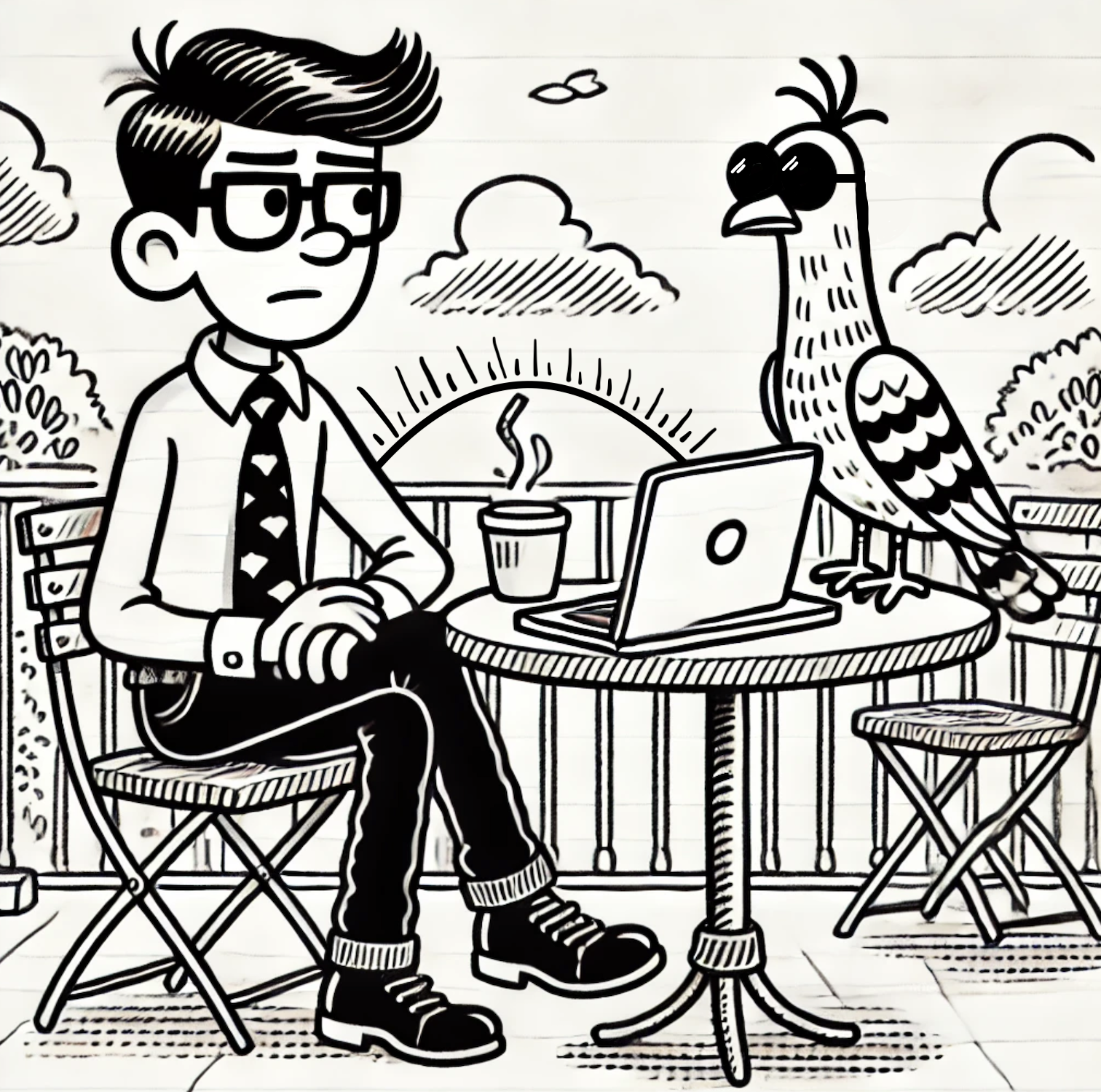
The sun was hanging low, painting the city in that half-golden, half-exhausted light. I sat outside a coffee shop, laptop open, pretending to work, but mostly just staring at a dashboard and questioning my life choices.
The coffee had gone cold. My playlist had looped twice.
And somewhere between “maybe I should switch careers” and “maybe I just need another latte,” the universe decided to intervene.
Out of nowhere, a pigeon landed across from me.
Not one of those jittery, bread-hunting ones. No, this one had gravitas!
It looked at me like it knew everything. My browser history, my career doubts, and exactly how many times I’d Googled “should I learn Python?”
It tilted its head. I tilted mine. It nodded. I nodded back.
And in that sacred, mildly unhinged moment, I knew: It was time to become a data scientist.
Was I well-rested? No.
Was I emotionally stable? Also no.
But destiny had spoken. And it had feathers!
That moment kicked off the saga:
- hundreds of YouTube tutorials,
- dozens of Python notebooks,
- a wildly unstable sleep schedule,
- a relationship with pandas (the data kind) more intense than I’ve had with any human.
Chapter 3: Python Returns… Again!
100 days of motivation, 30 days of progress, and 70 days of ghosting the course.
See, this wasn’t my first rodeo.
A year ago, I started the “100 Days of Code: The Complete Python Pro Bootcamp” by Dr. Angela Yu. Honestly, an amazing course. Highly recommend.
I was doing well. Learning functions, building projects, and convincing myself I was a hacker. But I fell into the classic trap:
enthusiasm > consistency.
I got distracted. Started. Stopped. Restarted. Gave up halfway. But those early Python fundamentals? They stuck around. Like a persistent rash. Or a loyal friend.
So I did what any rational human would do:
I opened Coursera, typed “Data Science” and enrolled in the first shiny course that promised me a six-figure salary and a Nobel Prize (probably). It was the IBM Data Science Certificate. And I promptly… gave up. After two videos. Listen, procrastination is part of the process, and greatness takes time and frequent naps.
Months later, with Angela Yu’s course echoing faintly in my memory, I fired up my first Jupyter notebook in months.
Typed print(“hello world”). Felt 2% smarter.
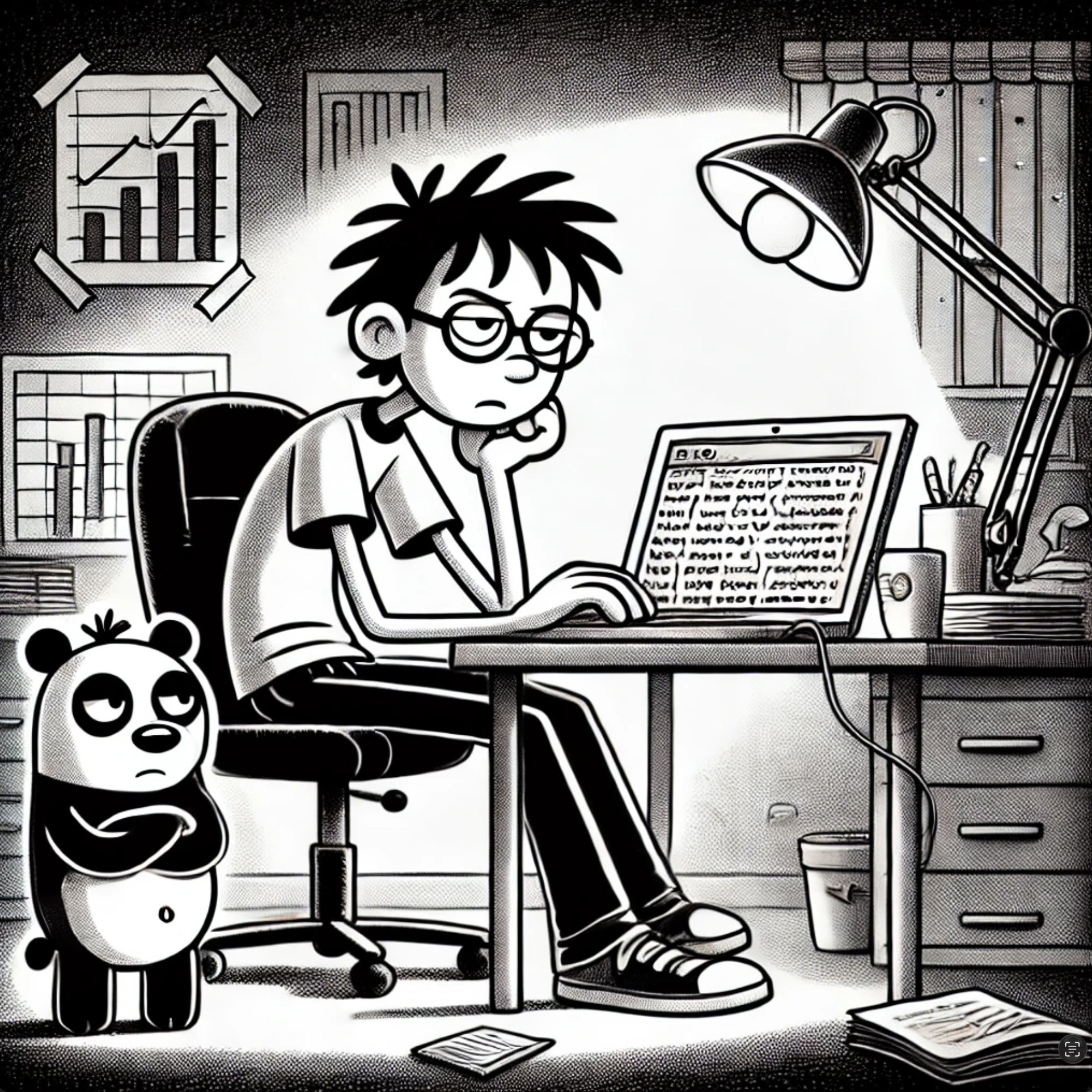
Then accidentally overwrote a list with an integer and stared at the error like it personally betrayed me.
Chapter 4: Pandas 🐼 & Plot Trauma 📊
When I met pandas, lost my sanity, and gained a lifelong respect for clean data.
If you told me a few years ago that I’d spend my nights debugging Python scripts and arguing with pandas, I’d probably have laughed, mostly because I thought pandas were still just the cute black and white kind. Sadly not 😔
I thought I was learning data science. What I was actually learning: how to wrestle CSV files into pandas without triggering 14 warnings. NaNs everywhere, and indexing that felt like sorcery.
Also discovered:
- NaN != NaN (fun)
- SettingWithCopyWarning (nightmare)
Eventually, I got it working. Created a plot using matplotlib.
The graph looked like abstract art: no labels, no axis, just vibes.
Still… a win is a win.
Chapter 5: The YouTube Rabbit Hole 🕳️
Where curiosity met the YouTube algorithm… and lost.
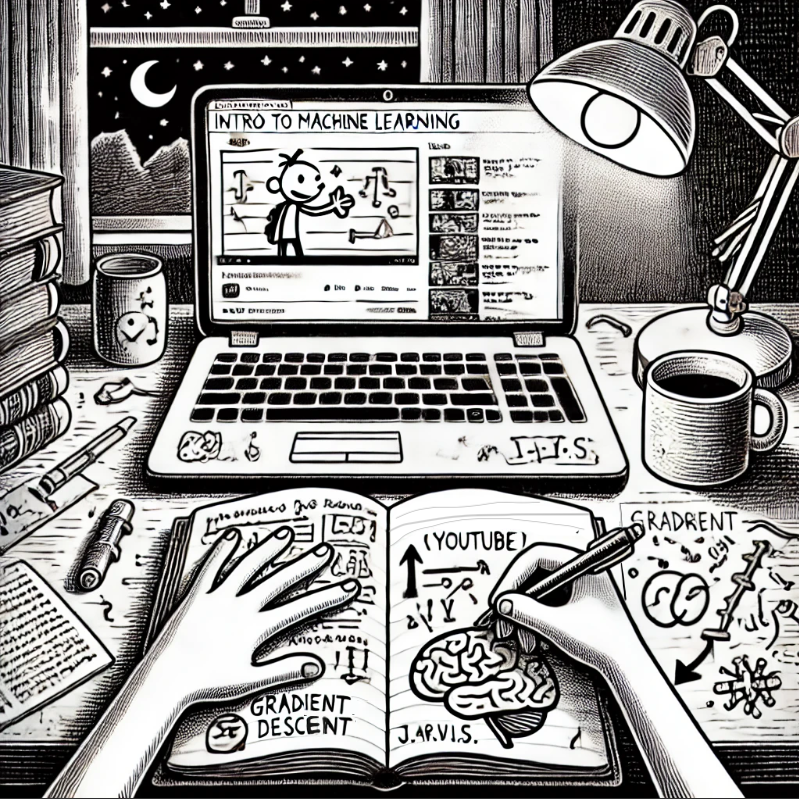
It started innocently enough, “Intro to Machine Learning.” The first video was smooth, clear explanation, clean visuals, everything made sense. I even nodded along like I understood what gradient descent was.
Then YouTube did what YouTube does best. It recommended something else.
Next thing I knew, I was watching:
- “What is backpropagation?”
- “Gradient Descent Explained”
- “How to create a neural network from scratch”
By the end of the night, I was convinced I could build J.A.R.V.I.S.
Spoiler: I could not.
That night, I learned two important lessons:
- YouTube’s algorithm knows me better than I know myself.
- Curiosity is a slippery slope, especially when served one autoplay at a time.
Chapter 6: The Redemption & The Crash
The comeback, the certificate, and the humbling plot twist.
Dozens of notebooks. Hundreds of tutorials. A sleep schedule hanging by a thread. But I made it through. Concepts started sticking. Things that once sounded like black magic started to make sense.
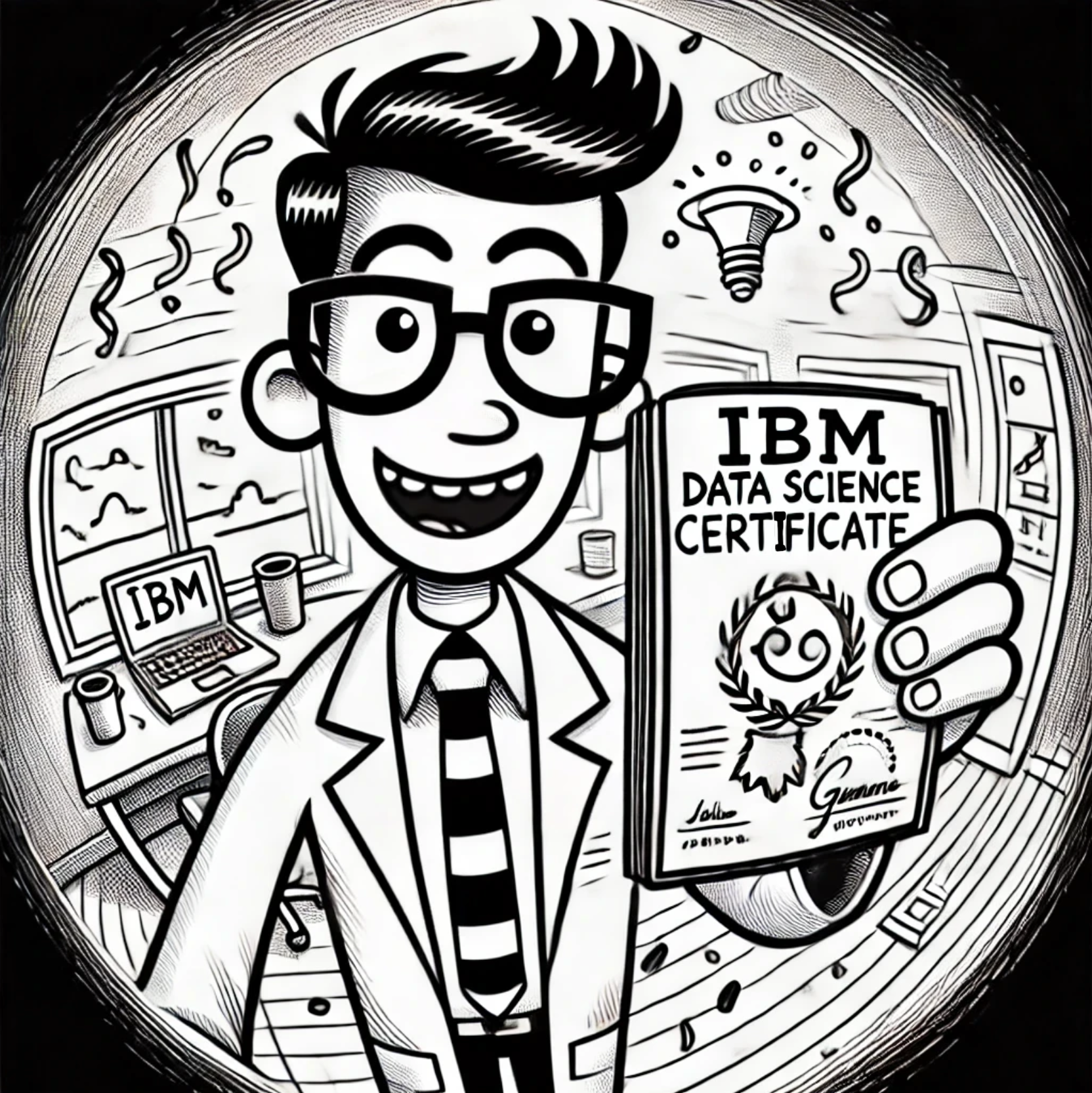
It wasn’t until a month later that I picked up the IBM Data Science Certificate again, like we were exes trying again. It didn’t feel right, but I was out of options. This time, I stuck it out. Took notes. Built projects. Googled like my life depended on it.
When I finally finished, the dopamine hit of posting my certificate on LinkedIn was stronger than expected. Might do it again. Just for fun.
Then reality hit.
See, courses teach you how things work. Real projects teach you why nothing does.
I built my first classifier all by myself this time. No guided notebooks, no step-by-step hints. Just me, Python, and chaos.
It failed spectacularly.
It predicted 100% of test cases incorrectly.
Accuracy: 0% Confidence: also 0% Fan noise: SpaceX liftoff 🚀
Google search history:
- “why my model sucks”
- “can a neural network ghost you”
- “is barista training a viable career pivot”
I nearly rage-quit. But I didn’t. Because deep down, I knew this was part of the process. You don’t get good at data science by being good. You get good by being terrible and refusing to stop.
Chapter 7: The First Real Project
Why start small when you can predict 42 diseases and a mental breakdown?
Finally, I felt ready for something bigger. So naturally, instead of starting with the Iris dataset like a sane beginner, I decided to predict 42 medical diseases using *132 symptom inputs.
Because nothing says “hello world” like trying to out-diagnose WebMD.
I built a classification system with pandas, scikit-learn, and whatever brain cells I had left. Tried Random Forest, Naive Bayes, Gradient Boosting, KNN, Logistic Regression, and SVC. Basically, they threw the entire zoo at it.
Evaluated with accuracy, precision, and recall. Perfect models? Nope. Valuable learning? Absolutely. Slightly terrifying? You bet.
It wasn’t the best project on GitHub, but it was mine, and for the first time, I started feeling like maybe this data science thing wasn’t just a dream. Maybe I was actually getting somewhere.
It wasn’t glamorous, but it was real. Progress!
🔗 View the full project on GitHub
Chapter 8: Imposter Syndrome Kicked In 💀
When your model barely runs, but everyone on LinkedIn is curing cancer with AI.
A few days after finishing my first big project, I made the mistake of scrolling through LinkedIn and saw a 19-year-old say:
“Just published my third AI paper and landed a role at Google!”
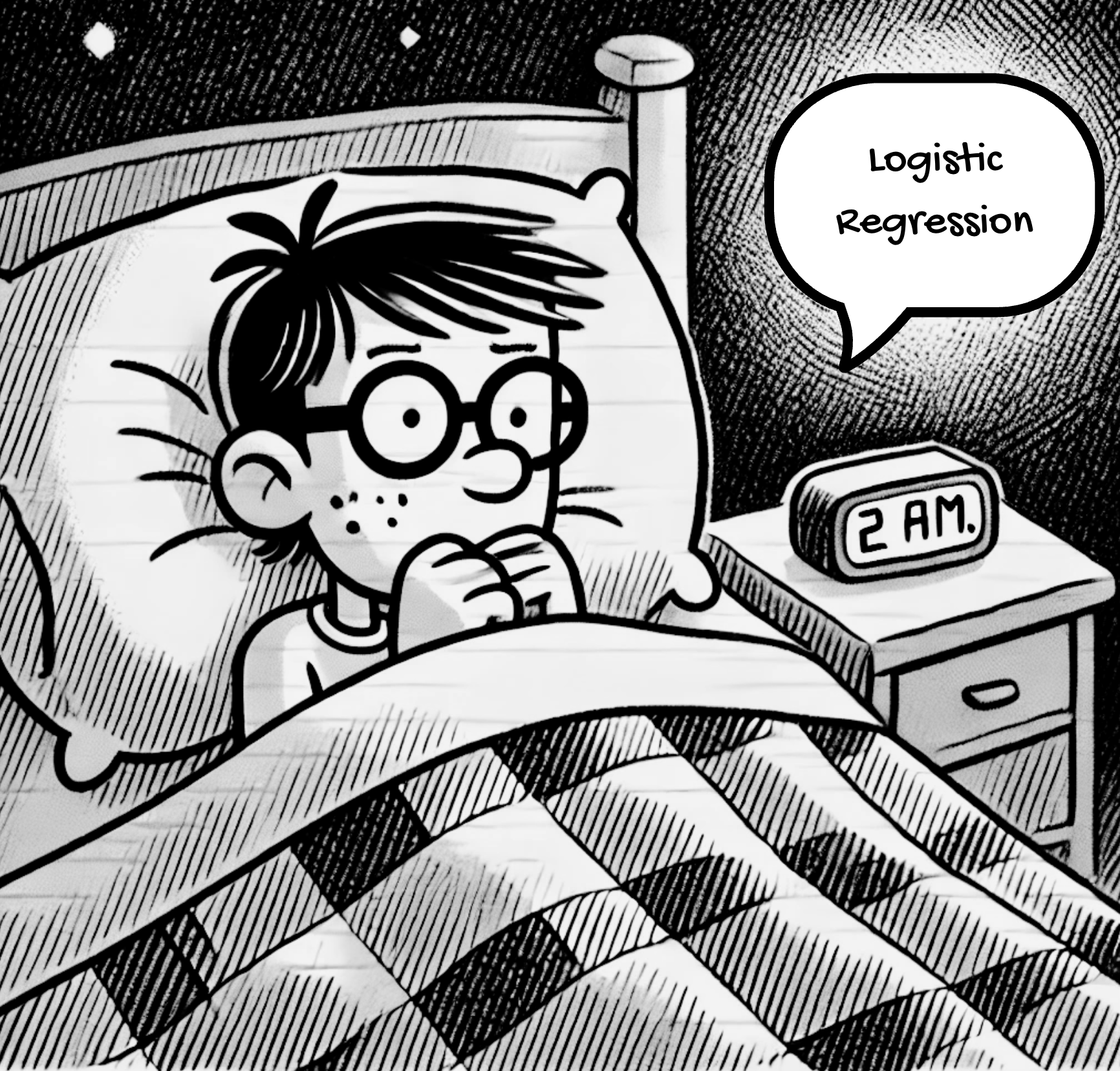
Meanwhile, I was over here celebrating the fact that my code didn’t crash for once. For a solid 10 minutes, I considered deleting LinkedIn, changing careers, and opening a café called “The Confused Coder”. Instead, I closed my laptop, lay in bed reciting machine learning terms like a bedtime prayer. Imposter syndrome, meet ✨coping mechanisms✨.
But here’s the thing I’ve realized since:
Everyone’s highlight reel looks perfect from the outside. What you don’t see are the hundreds of bugs, rewrites, and half-broken notebooks behind those “I built an AI startup at 21” posts.
So I stayed offline for a bit, refocused, and reminded myself this isn’t a race. It’s a marathon of curiosity, confusion, and occasional breakthroughs.
And that’s perfectly fine!
Chapter 9: The Side Quest 🎮
A brief detour into project management, because clearly I enjoy chaos.
At this point, I took a brief detour. A side quest, if you will.
For reasons I still can’t fully explain, I enrolled in the Google Project Management Certificate. I told myself I needed a palate cleanser, and honestly, I kind of did.
It was oddly satisfying. No algorithms. No NaNs. Just clean workflows, timelines, and tasks.
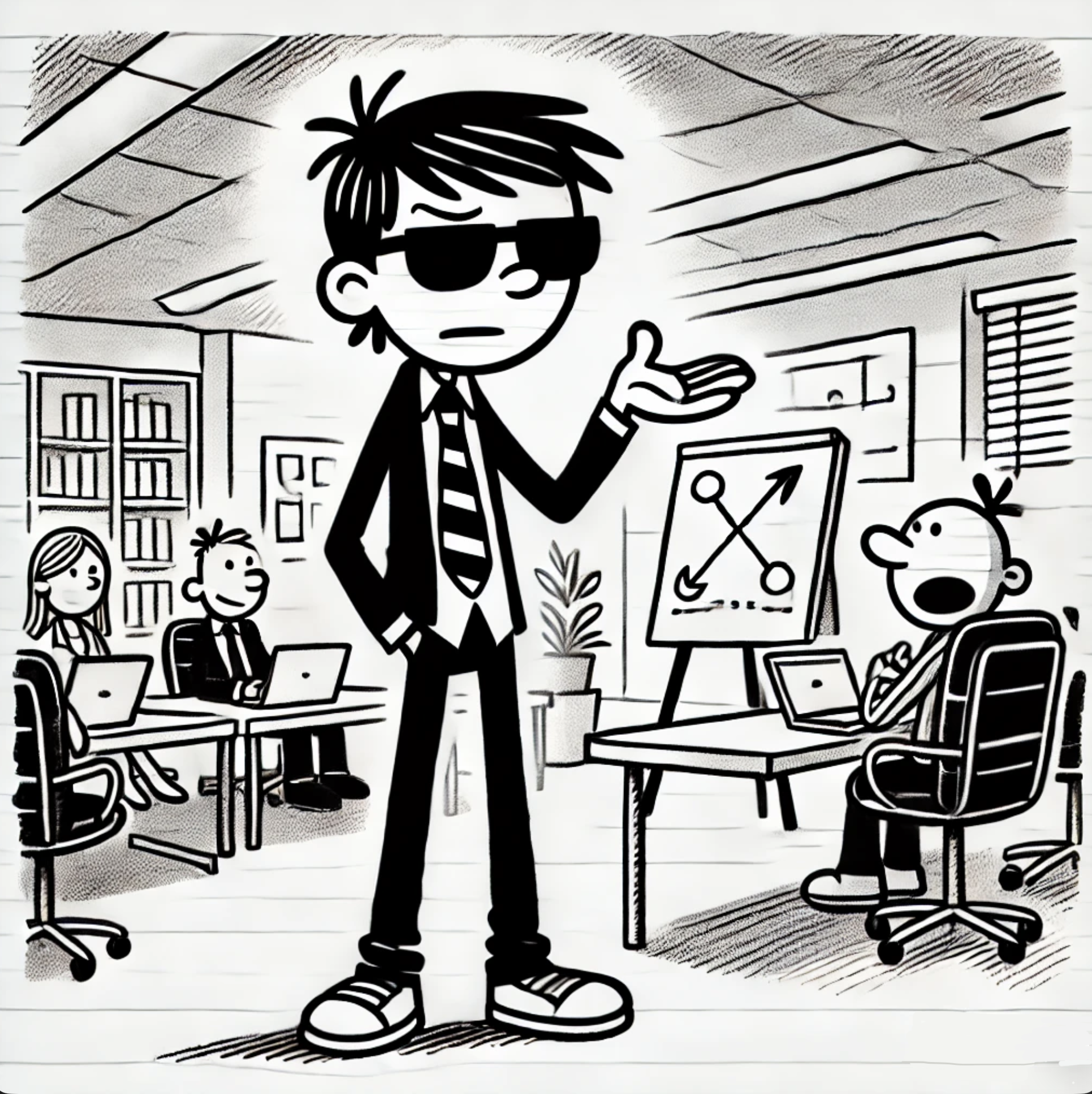
For two months, I pretended I was a Scrum Master leading a team of highly productive unicorns. Felt powerful.
And yes, I actually finished it! Proudly added that shiny badge to my growing collection of “certificates earned during identity crises.”
Then I remembered data science still existed… and wandered back to my chaotic notebook life.
Chapter 10: Halfway to Somewhere 🌟
Not quite a data scientist yet, but getting closer every dataset, every line of code, and every crash-and-learn moment.
Looking back, I can see how far I’ve come, from spreadsheets and KPIs to Python scripts and machine learning models that occasionally cooperate.
I feel more technically grounded than ever. I can wrangle data, build models, and explain what a confusion matrix is without being confused myself (most days). I keep learning something new every day. Not just about algorithms, but about how curiosity and persistence can turn confusion into clarity.
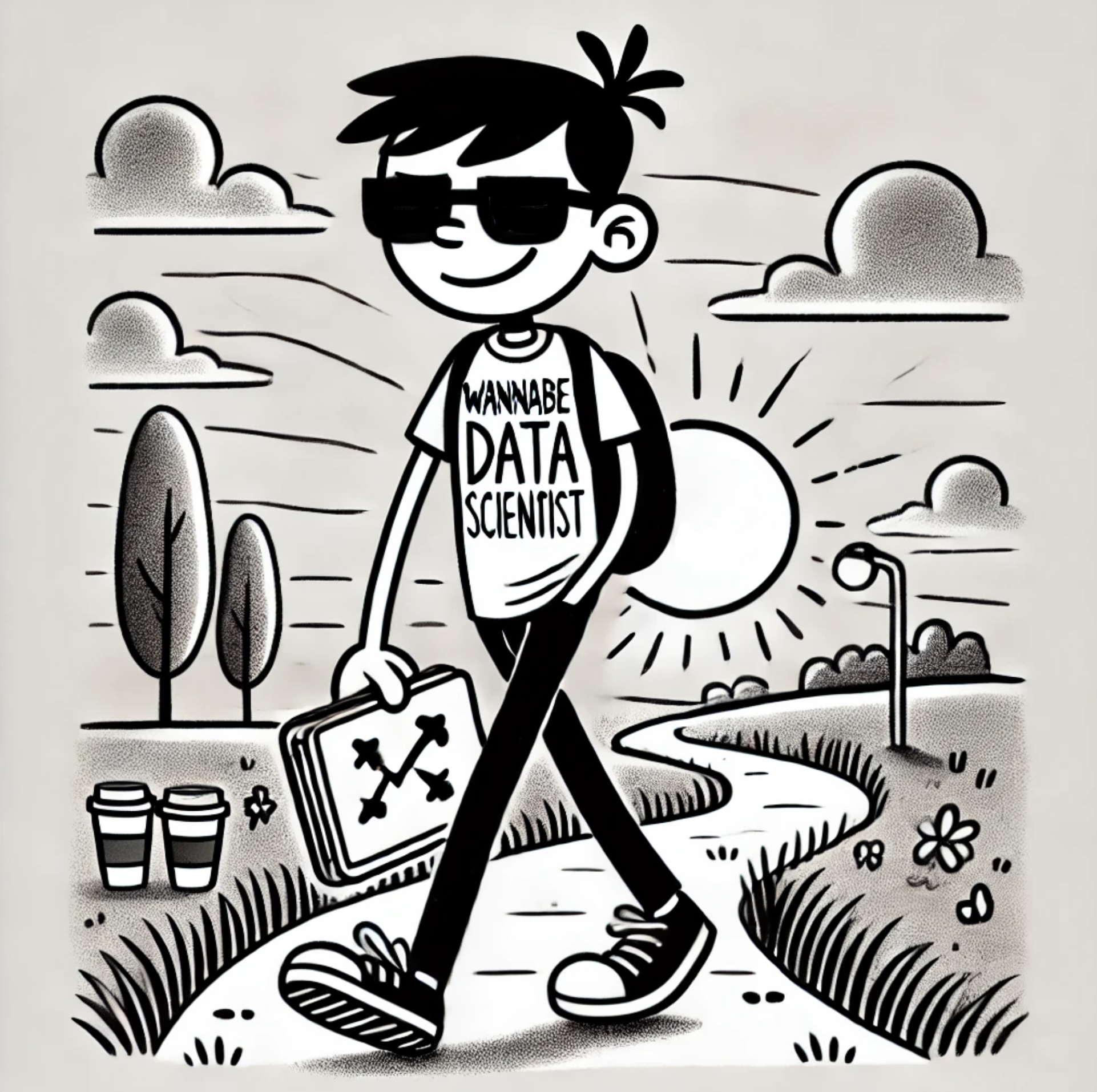
And while I still proudly wear the title “wannabe data scientist,” I’m closer than ever to dropping the “wannabe.” The journey from analyst to scientist has been unpredictable, chaotic, and honestly kind of fun.
But compared to where I started, let’s just say, the pigeon would be proud.
Epilogue
Somewhere along the way, I realized I don’t have to be an expert to share what I’ve learned. So here I am, writing about the wins, the fails, and the late-night Google searches that got me here.
Turns out, most of us are winging it; some of us just do it with more confidence.
📌 Lessons From the Journey (So Far)
- Starting is harder than finishing.
- YouTube can teach you a lot if you avoid the rabbit holes.
- Projects > Courses
- Your first model will suck. Build it anyway.
- Don’t wait until you’re ready. Start before that.
Final Thoughts 💭
If you’re just starting out and wondering if it ever makes sense, I get it!
It doesn’t feel linear. Or obvious. Or easy.
But if you’re still showing up, you’re doing it right.
One tutorial, one dataset, one imperfect model at a time.
And if this made you laugh, or cry, or feel a little seen, come say hi 👋
I’d love to connect. Or share more failed models.
Time to let my CPU cool off.
Let's Connect
If you have any questions or would just like to say hi, you can contact me through any of the platforms below.